Drone Thermal Inspection — Infrared Aerial Surveys
Drone thermal inspection in Burgundy: detect heat loss, moisture infiltration and faulty solar panels without scaffolding. Nièvre (58) and neighbouring departments.
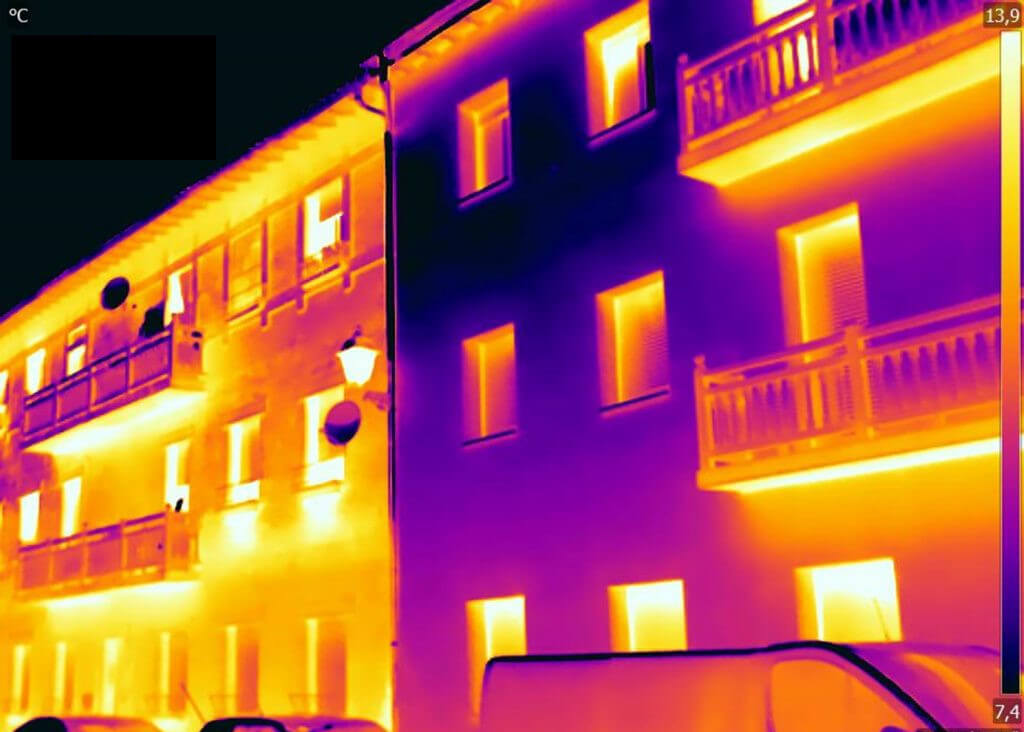
Using the infrared camera aboard our DJI Matrice 4TD, we detect in a matter of hours what the naked eye can never see: heat loss, water infiltration, faulty photovoltaic cells, electrical hot spots. Drone thermal inspection eliminates the need for scaffolding and reduces intervention time by 70–90% compared to traditional methods.
Why choose drone thermal inspection?
Traditional thermal audits require scaffolding, aerial platforms or rope access — time-consuming, expensive and sometimes impossible on certain structures. Drones remove these constraints:
- Speed: a 2,000 m² roof inspected in under one hour
- Safety: no work at height for your teams or contractors
- Precision: 640 × 512 px thermal sensor with super-resolution up to 1,280 × 1,024 px, sensitivity < 30 mK
- Traceability: illustrated report with georeferenced anomaly mapping and paired IR + visible images
Concrete applications
Roofs and building envelopes
Thermal bridges, insulation defects, moisture infiltration under waterproof membranes — infrared pinpoints heat loss zones that standard energy audits cannot localise precisely. Ideal before energy renovation works to target interventions efficiently.
Photovoltaic panels
On ground-mounted or rooftop solar installations, we identify cell by cell any hot spots (failed cells, partial shading, delamination, faulty connections) that penalise your system's output.
Agricultural and industrial buildings
Farm buildings, greenhouses, warehouses: thermal inspection prioritises renovation works before winter and reduces energy bills. It also detects moisture infiltration in metal sheet roofing before it damages stored goods.
Electrical networks and technical equipment
Detection of hot spots on outdoor electrical cabinets, cables, connections and transformers — before overheating causes downtime or fire. The thermal camera operates at night without disrupting activity.
Who is it for?
- Local authorities: schools, town halls, sports halls, social housing — comply with mandatory energy audits
- Farmers and livestock farmers: farm buildings, greenhouses
- Solar farm operators: performance monitoring, early fault detection
- Property managers and housing associations: planned maintenance before renovation
- Energy consultants: input data for regulatory audits
- Insurers: expert appraisal following moisture or fire damage
When to intervene?
Thermal inspection is optimal when the temperature difference between inside and outside exceeds 10 °C. Best intervention windows:
- Autumn and winter (October to March) for heated buildings
- Early morning or late afternoon to minimise parasitic solar radiation on rooftops
- At night for electrical equipment and cooled solar panels
Service area
We operate in Nièvre (58) and neighbouring departments: Yonne (89), Côte-d'Or (21), Saône-et-Loire (71), Allier (03), Cher (18) and Loiret (45).